
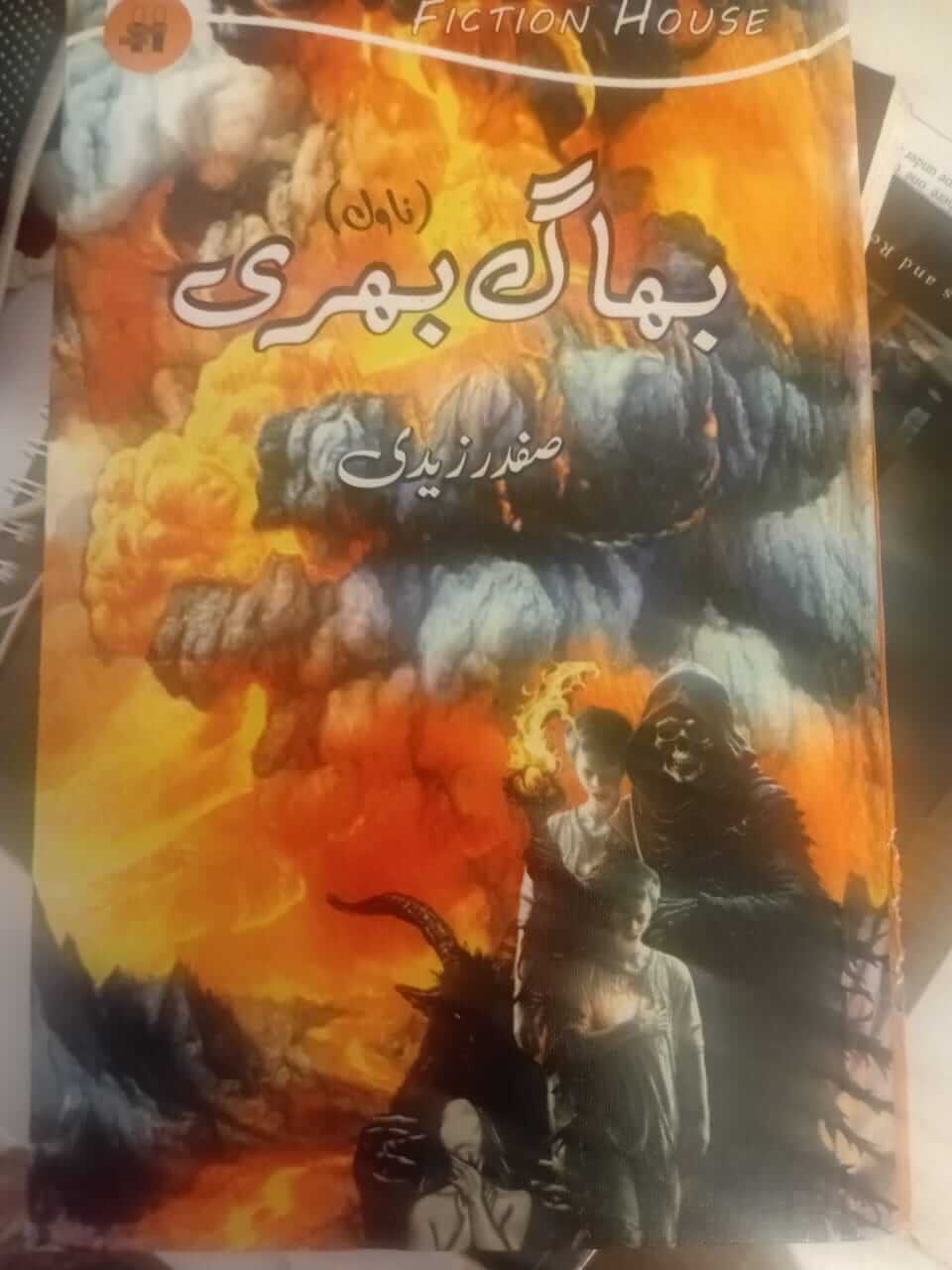
Bhag Bhari
By Dr Aamir Butt
Bhag Bhari
Towards the end of 1970s Soviet army deployed in Afghanistan. The military intervention was to support a faction of Afghanistan’s dominant political party against the other. This was the time of the Cold War between the US led capitalist block and the Soviet led communist block. The presence of Soviet troops in Afghanistan was looked at with suspicion, some analysts believed that the next step of the Soviets will be to take over Pakistan and find an access to the warm waters of the Indian ocean.
In my opinion the above possibility was nothing but a wild fantasy. In Pakistan, the left-wing political parties and the communist party did not have the ability to support a Soviet backed communist government and the hype of a Soviet invasion was nothing, but a scam created by the military dictator General Zia ul Haq who had sized power a couple of years ago.
Zia had hanged Pakistan’s first elected Prime Minister and crushed any dissent with unusual brutality. For him, the Soviet incursion in Afghanistan was a God given opportunity to present Pakistan as a bulwark against further Soviet advances.
Within Afghanistan, while the government and their Soviet backers were able to control the cities, in the rural areas the religious leaders gave a call of Jihad against the foreign army.
Zia hatched a plan with the Americans to support the Afghan jihad and bleed the Soviets in Afghanistan where the rugged mountain terrain was ideal for guerrilla warfare.
As American dollars and arms flowed into Pakistan to be used in Afghanistan, training camps for the guerrilla fighters were set up in Pakistan.
Pakistani military planners believed that the best fighter would be someone who has total belief in the cause and is fighting to please Allah expecting a reward in the afterlife. As such a fanatic belief can most effectively be installed in someone brainwashed from an early age, madrasas funded by Pakistan government were set up where children were prepared to become the warriors of Allah whose main purpose in life was to eliminate the non-believers. For this, the best variety of children were the boys who had no family and thus were totally dependent on their teachers and leaders.
Safder Zaidi’s novel is based on this background and narrates the story of one such boy who is taken up by the jihadi-trainers and completely brainwashed into becoming a killing machine who feels no remorse as long as he told by his leaders that those he is killing are Kafirs (non-believers).
Interestingly the child belongs to a family of Hindu untouchables bound in feudal slavery and oppressed by their Muslim masters in Pakistani Sindh.
When fully grown as a Jihadi he believes that Hindus like other non-Muslims should be killed.
Zaidi is originally from Sindh and now lives in the Netherlands. Like all of us who grew up in the Pakistan of 1980s and 90s he must have witnessed the decline of the country and the society into the hell of religious fanaticism and the associated terrorism. Although all sections of Pakistani society suffered, people of the Shia sect were specifically targeted by the Salfi/Wahabi militias resulting in the killing of hundreds of doctors, teachers, writers etc. Even little children were not spared. Zaidi has presented a fictionized account of these real events.
In addition, the novel tries to wake us up to the danger of a nuclear war as both Pakistan and India possess nuclear weapons and religious extremism has been on the rise in India as well.
What all sane people in both countries fear is that the political animosity that already exists between the two may be stroked by religious extremism and if led by politicians who are using religion as a force of hate against the other, a flash point can trigger a nuclear war. The novel gives us a glimpse of what nightmarish fate awaits both countries if they go down that route.
As Jonas Mekas has told us,
‘In the very end, civilizations perish because they listen to their politicians and not to their poets.’
And indeed, poets have warned us about the nuclear catastrophe.
گذشتہ جنگ میں گھر ہی جلے مگر اس بار
عجب نہیں کہ یہ تنہائیاں بھی جل جائیں
گذشتہ جنگ میں پیکر جلے مگر اس بار
عجب نہیں کہ یہ پرچھائیاں بھی جل جائیں
In the last war houses burnt but this time
It is possible that empty spaces will burn as well
In the last war bodies burnt but this time
It is possible that shadows will burn as well
(Sahir Ludihanvi)
Dr Aamir Butt is a Lahore-born dermatologist and cultural writer based in the UK. A veteran of the NHS with 25 years of practice, he retired in 2022 to focus on writing and travel. His lifelong admiration for Lahore finds poetic expression in his book Lahore: Places, People, Stories—a lyrical and researched collection of short essays that frame the city as a living narrative of history, culture, architecture, and sentiment. Celebrated for its narrative depth and production quality, the book is a modern homage to a timeless city.

You may also like

Faith and Fury in Pakistani Populism: Why PTI Isn’t TLP

