Remembering Dr. Rubina Saigol: Education, Feminism and the Power of the Curriculum
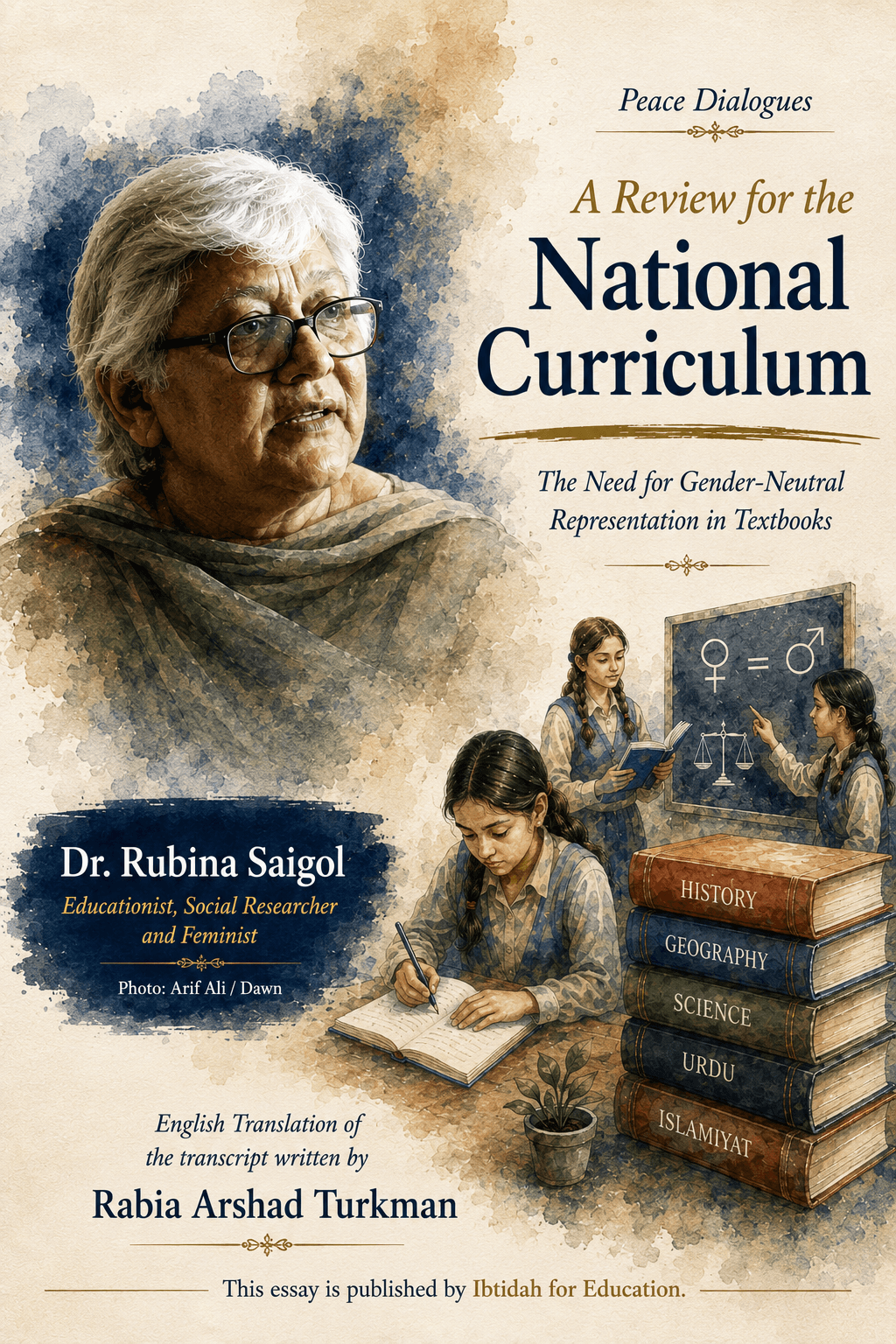
On the death anniversary of Dr. Rubina Saigol, I am bringing forward this interview from the 14-part Dialogue Series with education experts that Zeeba T. Hashmi initiated in 2020–2021 to gather expert perspectives on the National Curriculum of Pakistan (formerly Single National Curriculum) then being introduced. The interviews subsequently formed part of a policy brief, The Educational Chaos and the Role of SNC: a way forward. This conversation with Dr. Saigol was conducted by fellow journalist and researcher Rabbia Arshad Turkman, in 2020.
Dr. Saigol’s central concern was that education does not merely impart knowledge—it shapes how we see ourselves and others. She argued that Pakistan’s textbooks reproduce rigid gender roles, presenting women primarily as mothers and homemakers while making invisible their work as farmers, workers, scientists, professionals, athletes and activists.
She also challenged the one-dimensional narratives through which history, religion and communities are taught. Such binaries—good versus bad, us versus them, male versus female—narrow children’s capacity to question, reason and understand difference.
For Dr. Saigol, reform meant removing prejudice, restoring diversity and tolerance, bringing ordinary people and women into history, and giving teachers autonomy, training and dignity.
Her legacy is a reminder that education must expand the mind, not close it.